Materials, interiors & sleep
Wool Comforters Through the Seasons: Natural Insulation and Bedroom Design
A wool comforter has a quietly persuasive kind of luxury: warmth without unnecessary weight, softness without a stuffy atmosphere, and a tactile presence that can make a bedroom feel considered rather than merely dressed. Its appeal lies in the character of the fiber itself—and in the way fill, fabric, and seasonal layering work together.
Published October 21, 2026
The quiet intelligence of wool
Some bedding announces itself in a room; wool tends to make its case more subtly. It is a natural fiber with a long history of practical use, valued for warmth, resilience, and its capacity to manage moisture. In a comforter, those qualities create a distinctive sleep layer: insulating, but not necessarily dense; cozy, yet often less clammy than a sleeper might expect from a substantial covering.
The explanation begins with wool’s structure. Individual fibers are naturally crimped, creating small pockets that can hold still air. Air is a useful insulator, and the resulting structure helps slow the movement of heat away from the body. At the same time, wool can absorb some moisture vapor into the fiber and release it gradually as conditions change. In everyday terms, this may help a bed feel more balanced across the night—not simply hot or cold, but comfortable through ordinary shifts in body warmth and room temperature.
That is not a promise of identical comfort for every person. Sleep climate depends on the room, mattress, sleepwear, humidity, personal temperature preferences, and the rest of the bedding ensemble. A wool comforter is best understood as one element in that system: a natural insulation layer whose performance depends on its construction and how it is used.
It is also worth distinguishing moisture management from waterproofing. Wool is not a substitute for a mattress protector, and its ability to take up moisture does not mean a comforter should be exposed to spills or left damp. Thoughtful care and proper airing remain essential to preserving the loft, freshness, and life of natural bedding.
Fill weight: the detail that changes the season
When comparing wool comforters, the amount of fill is one of the most useful details to examine. A lighter fill generally creates a less insulating layer, while a heavier one can provide more warmth and a fuller, more enveloping drape. The relationship is intuitive, but fill weight alone does not tell the whole story. Stitching, quilting, the distribution of the wool, and the shell fabric can all influence how a comforter feels in use.
Descriptions such as “light,” “medium,” or “all-season” are helpful starting points, not universal standards. One maker’s light comforter may feel different from another’s, and bedroom conditions vary enormously. A well-heated apartment in winter might call for a lighter layer than a drafty room in a milder climate. Likewise, a warm sleeper may find a single medium-weight comforter comfortable in weather that leads someone else to add a blanket.
Look for clear information about fill amount, dimensions, construction, and recommended care. If a maker provides a warmth description, treat it as guidance rather than a guarantee. Consider how you already sleep: Do you wake feeling overheated? Do you prefer a generous tuck of bedding? Is your bedroom cool overnight, or does its temperature stay fairly steady? Those simple observations can make a comparison more meaningful than a label alone.
Construction matters because fill needs to remain reasonably even. Quilted or sewn-through designs divide the comforter into sections, helping limit movement of the wool and preserve a consistent surface. The size and pattern of those sections can affect the comforter’s appearance and hand. A compact grid may give it a more tailored look; larger channels can create a softer, more relaxed profile. Neither is inherently superior: the right choice is the one that balances function with the desired feel and silhouette.
A seasonal approach, not a seasonal rulebook
Natural bedding is often discussed in terms of four seasons, but a bedroom rarely observes the calendar with perfect precision. Heating, insulation, open windows, regional humidity, and personal comfort all complicate the neat division between summer and winter. A more useful approach is to think in layers that can be adjusted as conditions change.
In colder months, a wool comforter can serve as the main insulating layer. A breathable sheet beneath it and a duvet cover over it help create a soft, practical system that feels inviting without requiring a pile of unrelated blankets. If the room becomes especially cold, a lightweight blanket can be added on top or between layers. That arrangement makes it easier to fine-tune warmth than relying on a single, exceptionally heavy covering.
During transitional weather, a lighter wool comforter may work on its own, or a medium-weight one can be paired with a coverlet that is easy to remove. The charm of this in-between season lies in flexibility: the bed can look composed in the morning yet adapt to a cool night or a warmer afternoon. Keep an extra layer folded nearby rather than making the bed so heavily that adjustment becomes a chore.
In warm weather, some sleepers may prefer to store a heavier comforter and use a lighter wool fill, a cotton blanket, or simply a sheet. Wool’s capacity to manage moisture does not make every wool comforter suitable for every summer climate. A thick fill in a hot room may still feel too warm. The point is not to insist on one material year-round, but to select the weight and layers that make sense for the room and the sleeper.
For households with pronounced seasonal changes, two moderate layers can be more adaptable than one very heavy comforter. A light blanket and a medium-weight comforter can be combined in winter and separated as temperatures rise. It is a practical strategy that also gives the bed a more dimensional, collected appearance.
The cover fabric completes the experience
A comforter’s shell is easy to overlook when attention is fixed on the fill, but it is the fabric closest to the sleeper and a major part of the overall impression. Cotton is a familiar choice for its breathable feel and broad range of finishes. A crisp cotton percale brings a cool, matte surface that suits a clean, pared-back bed; sateen tends to feel smoother and more fluid, with a subtle sheen that lends a little formality.
Linen introduces a relaxed texture and an appealingly unstudied quality, especially in rooms where the design favors natural materials and softened edges. Its characteristic creasing can make a bed feel lived-in rather than overly polished. Blended fabrics may offer different care or durability characteristics, so it is sensible to consult the maker’s specifications instead of assuming that every shell will behave alike.
A removable duvet cover adds another useful layer of choice. It protects the comforter from everyday wear, allows the bed’s color story to shift with the season, and is usually simpler to launder than the filled item itself. Check the cover’s dimensions against the comforter, and look for closures and interior ties if keeping the insert in place is important. A cover that is too small can compress the fill; one that is too large may let it bunch at the corners.
Color and texture can be as consequential as weave. Warm ivory, muted ochre, dusty blue, or a restrained stripe can make wool feel at home in a vintage-inspired room without turning the bed into a period costume. Pattern can come from a cover, a quilt, or a narrow woven blanket, while the comforter itself remains calm. That balance gives the materials room to speak.
Wool in a vintage-inspired bedroom
Retro-inflected interiors are often built from contrasts: polished wood against matte paint, a sculptural bedside lamp beside simple linen, rounded forms softened by crisp geometry. A wool comforter can join that vocabulary through its surface and drape. Its natural texture lends warmth to a room of clean lines, while a restrained cover allows a distinctive headboard or bed frame to remain the focal point.
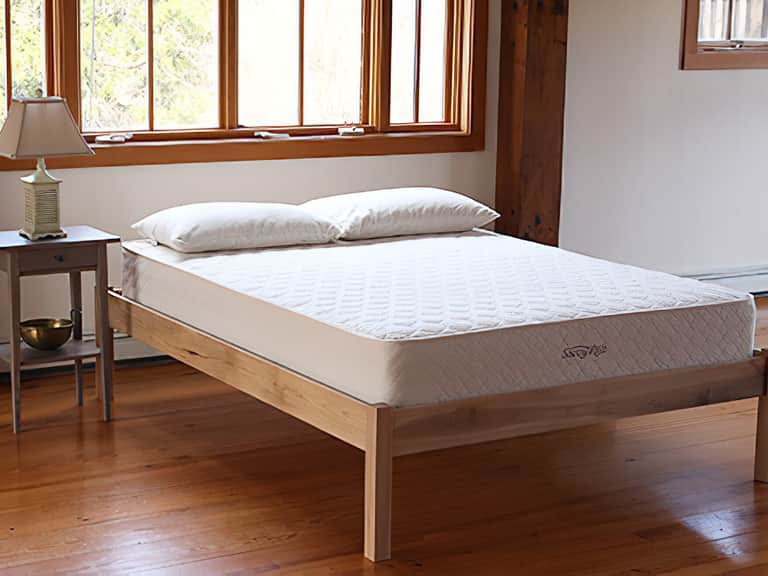
Start with the bed’s proportions. A low platform frame suggests a more streamlined silhouette, so a neatly arranged comforter and lightly layered coverlet can preserve its clarity. A taller or more decorative frame may invite a longer drape, but generous bedding should not obscure details that give the furniture its character. The aim is harmony, not concealment.
Color can connect the bed to the wider room without matching everything exactly. A soft cream cover might pick up the grain of a pale wood frame; a muted green or rust-colored accent could echo a vintage rug or a painted bedside table. Use repeated tones sparingly. One or two considered connections often feel more elegant than a complete color match.
Texture is another way to build depth without visual clutter. Pair the wool’s gentle loft with smooth cotton sheets, a knitted throw, or a quilt with a modest stitched pattern. Varying the surfaces gives a composed bed a tactile richness, particularly in a limited palette. Avoid piling on decorative layers simply to make the room look finished; each element should have a role, whether warmth, protection, or visual balance.
Because wool comforters can have a substantial presence, proportions matter. A thick layer may make a narrow bed seem fuller, while an especially large comforter can overwhelm a delicate frame. Consider the comforter’s stated dimensions, the mattress depth, and the amount of drop desired on each side. In a smaller room, a more tailored fall can keep the floor and furniture visible, preserving a sense of space.
A considered approach to care
Natural fibers reward care that is attentive rather than aggressive. Follow the maker’s instructions first, since washability and recommended methods differ by construction. Some wool comforters may be suitable for gentle laundering; others may require professional cleaning or another specific method. Avoid assuming that a bulky filled item can be treated like a cotton sheet.
Regular airing can help keep bedding fresh between washes. When practical, allow the comforter to breathe in a dry, shaded, well-ventilated space. Prolonged direct sunlight may affect some fabrics and colors, while damp conditions can undermine freshness. If the comforter becomes wet, dry it thoroughly according to its care guidance before storing or making the bed.
A duvet cover is an especially useful everyday safeguard. Wash it at the interval appropriate to your household, and attend to small marks promptly in a manner suitable for the fabric. When it is time to store the comforter, make sure it is clean and completely dry. Choose a breathable storage bag or container rather than sealing it away while damp, and avoid compressing it for long periods if that would flatten its loft.
These simple routines help preserve a comforter’s hand and appearance, but they are not a substitute for product-specific instructions. Wool blends, shell fabrics, quilting methods, and fill treatments can all change the right care approach. The label and maker’s guidance should take precedence over general advice.
A practical checklist before choosing
Rather than shopping by a single promise—“cool,” “cozy,” or “all-season”—consider the whole sleep arrangement. A short checklist can make the decision clearer:
- Room climate: Note whether the bedroom is heated, drafty, humid, or subject to large overnight temperature changes.
- Personal preference: Consider whether you tend to sleep warm, enjoy a substantial covering, or prefer a light layer that is easy to adjust.
- Fill weight and construction: Compare the stated fill, warmth guidance, quilting pattern, and dimensions rather than relying on a broad seasonal label.
- Cover compatibility: Check the duvet cover size, fabric, closure, and any ties that help keep the insert evenly positioned.
- Care requirements: Make sure the recommended cleaning and storage routine suits your household and available facilities.
- Room proportions: Think about how much drape you want and whether the comforter will complement, rather than hide, the bed frame.
Where possible, read the full specifications and clarify any ambiguous care or warmth language before making a decision. Personal experience with a particular fill weight or shell fabric can also be a helpful reference, but it should be weighed against differences in climate and bedroom setup.
The lasting appeal of natural bedding
Wool comforters sit at a satisfying intersection of material knowledge and everyday design. Their natural insulation can offer warmth without relying solely on bulk, while moisture management helps explain their enduring place in conversations about seasonal sleep comfort. Their character is shaped not by fiber alone, but by fill weight, quilting, shell fabric, room temperature, and the layers surrounding them.
In a bedroom, they offer more than a practical response to changing weather. A well-proportioned comforter can soften the geometry of a platform bed, bring tactile depth to a restrained palette, and make a vintage-inspired space feel inviting rather than staged. Pair it with breathable sheets, a removable cover, and a thoughtful mix of lighter layers, and the bed can adapt with the season without losing its sense of style.
The most successful arrangement is rarely the most complicated. It is the one that feels comfortable in the room where it is used, is manageable to care for, and looks naturally at ease with the furniture around it. Wool’s appeal is ultimately a quiet one: a material with a distinctive relationship to warmth, translated into a bed that feels personal, considered, and ready for the changing rhythms of the year.